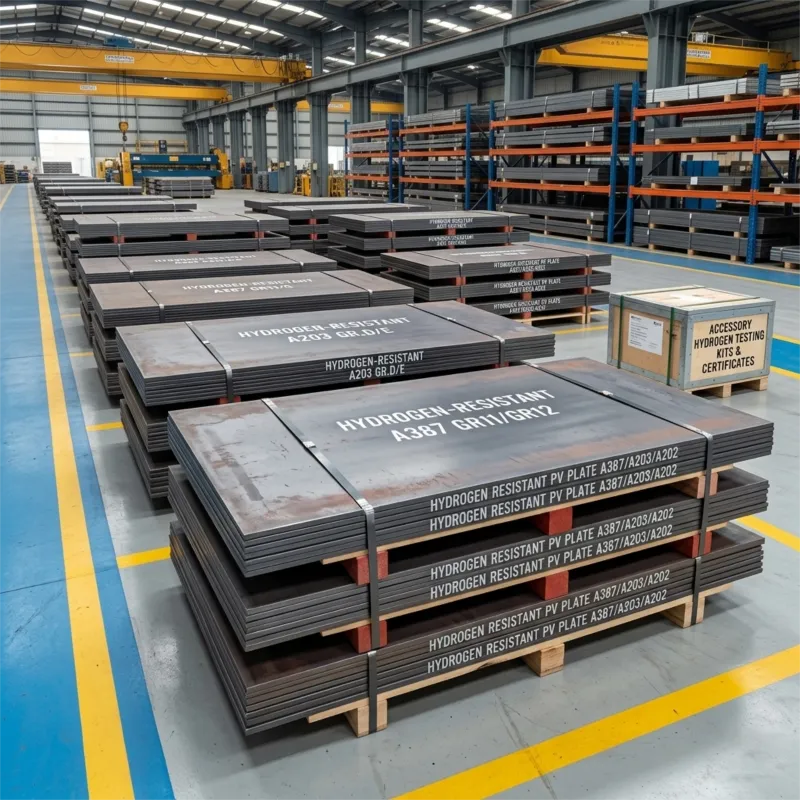
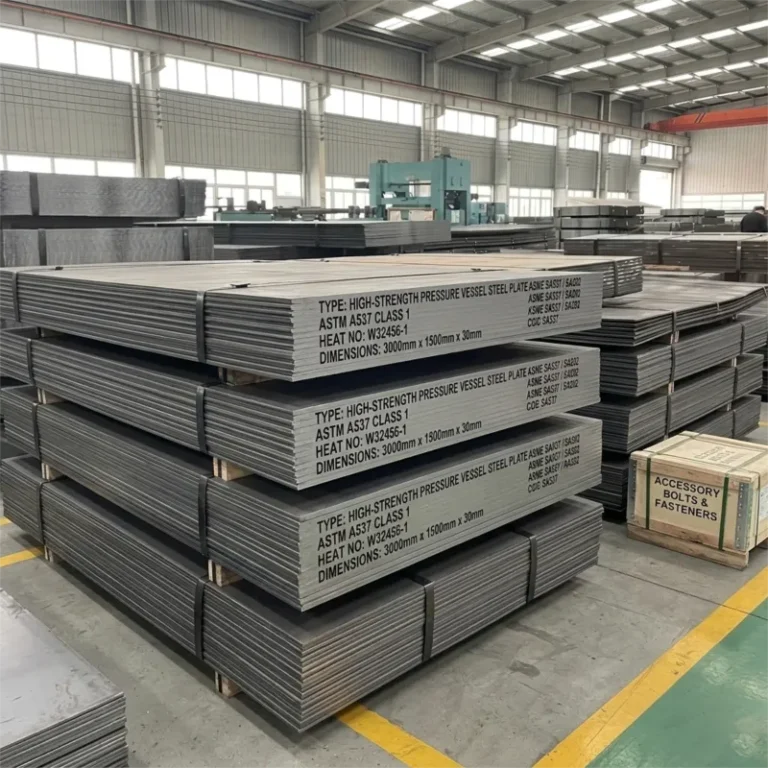
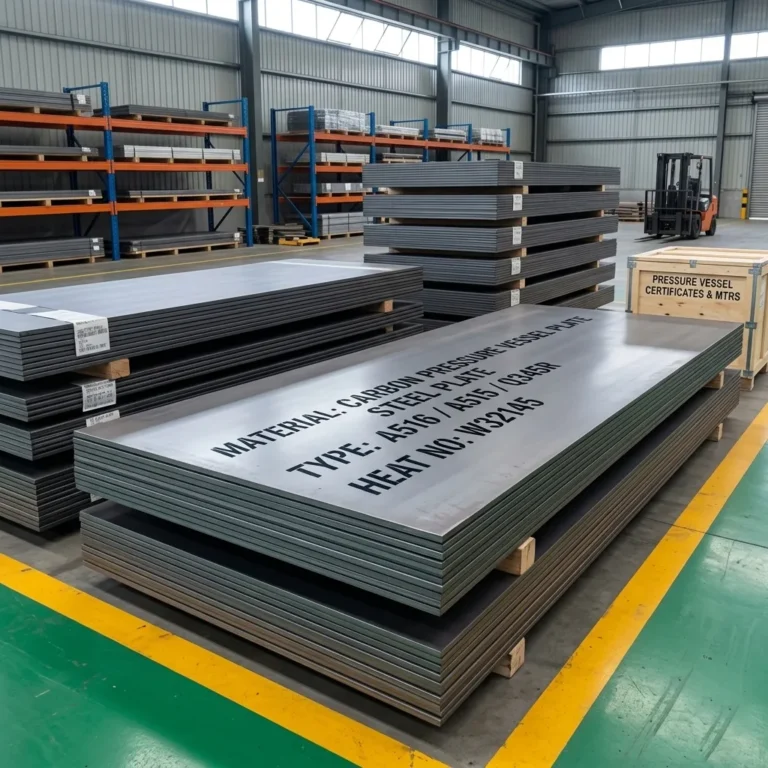
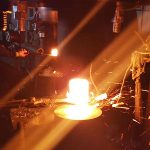
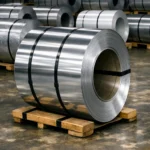
High‑Temperature Pressure Vessel Steel Plate is engineered for elevated‑temperature service, typically ranging from 400°C to 600°C, where resistance to:
Creep
Thermal fatigue
Hydrogen attack
Oxidation
High‑temperature strength loss
is essential.
These steels are widely used in:
Refinery reactors
Hydrogenation units
High‑temperature boilers
Petrochemical heaters
Heat exchangers
Pressure vessels operating under elevated temperatures
This category includes Cr‑Mo alloy steels, Mo‑alloy steels, and high‑temperature EN/GB grades.
🟪 2. Why High‑Temperature Pressure Vessel Steel?
Maintains strength at elevated temperatures
Excellent resistance to creep deformation
Superior resistance to hydrogen attack (Cr‑Mo grades)
Good weldability and heat‑treating performance
Suitable for high‑pressure, high‑temperature petrochemical environments
Required by refinery and chemical plant design codes
🟪 3. Product Categories
🟪 A. Cr‑Mo Alloy Pressure Vessel Steel (For 400–600°C Service)
Used for high‑temperature reactors, hydrogenation units, catalytic cracking, and petrochemical heaters.
Included Grades
A387 (Grade 5 / 9 / 11 / 12 / 22 / 91)
Key Notes
Designed for high‑temperature and high‑pressure environments
Excellent creep resistance
Strong resistance to hydrogen attack
Widely used in refineries and petrochemical plants
Grade 91 is used for ultra‑high‑temperature service
📌 A387 is the world’s most widely used high‑temperature pressure vessel steel family.
🟪 B. Molybdenum‑Alloy Pressure Vessel Steel (Mo‑Alloy)
Used for elevated‑temperature pressure vessels requiring improved strength and toughness.
Included Grades
A204 (Grade A / B / C)
Key Notes
Higher strength than carbon steel at elevated temperatures
Good resistance to thermal fatigue
Suitable for boilers, heaters, and high‑temperature pressure vessels
🟪 C. High‑Temperature EN Pressure Vessel Steel
Used in European and international petrochemical and power generation industries.
Included Grades
P355GH
P460N
P460M
Key Notes
Designed for high‑temperature and high‑pressure service
P460N/M used for thick‑wall high‑temperature vessels
Excellent weldability and toughness
🟪 D. High‑Temperature GB Pressure Vessel Steel
Used in Chinese petrochemical, power generation, and refinery equipment.
Included Grades
Q345R (High‑Temperature Applications)
Q370R (Enhanced High‑Temperature Performance)
Key Notes
Widely used in boilers, reactors, and high‑temperature pressure systems
Q370R offers improved high‑temperature strength
🟪 E. High‑Temperature Nickel‑Alloy Pressure Vessel Steel
Used for high‑temperature + low‑temperature + hydrogen service.
Included Grades
A203 (A / B / D / E / F)
Key Notes
Nickel improves toughness and high‑temperature stability
Suitable for combined high‑temperature and low‑temperature cycles
🟪 F. High‑Strength High‑Temperature Pressure Vessel Steel
Used for thick‑wall, high‑pressure, high‑temperature vessels.
Included Grades
A202 (A / B)
A537 (Class 1 / 2 / 3)
Key Notes
Higher strength for heavy‑duty pressure vessels
Suitable for high‑pressure, high‑temperature reactors
🟪 4. Complete Grade List (High‑Temperature Service)
ASTM / ASME
A387 (Gr 5 / 9 / 11 / 12 / 22 / 91)
A204 (A / B / C)
A202 (A / B)
A203 (A / B / D / E / F)
A537 (Class 1 / 2 / 3)
EN 10028
P355GH
P460N
P460M
GB
Q345R (High‑Temp)
Q370R
🟪 5. Mechanical Properties
Grade
Yield Strength
Tensile Strength
Temperature Resistance
Notes
A387 Gr 11
≥275 MPa
415–585 MPa
Up to ~600°C
Cr‑Mo alloy, creep‑resistant
A387 Gr 22
≥275 MPa
450–620 MPa
Up to ~600°C
Hydrogen‑resistant
A387 Gr 91
≥415 MPa
585–760 MPa
Up to ~650°C
Ultra high‑temperature steel
A204 Gr C
≥275 MPa
485–620 MPa
Up to ~550°C
Mo‑alloy steel
P355GH
≥275 MPa
470–630 MPa
High‑temperature boilers
EN standard
P460N
≥460 MPa
550–720 MPa
High‑pressure, high‑temp
Thick‑wall vessels
Q370R
≥370 MPa
510–650 MPa
High‑temperature reactors
GB high‑temp grade
🟪 6. Chemical Composition
Grade
C (%)
Mn (%)
Si (%)
Cr (%)
Mo (%)
Notes
A387 Gr 11
≤0.15
0.40–0.65
0.50–1.00
1.00–1.50
0.45–0.65
Cr‑Mo alloy
A387 Gr 22
≤0.15
0.40–0.65
0.50–1.00
2.00–2.50
0.90–1.10
High‑temp hydrogen service
A204 Gr C
≤0.20
0.90–1.50
≤0.50
—
0.45–0.60
Mo‑alloy
P355GH
≤0.20
0.80–1.50
≤0.40
—
—
EN high‑temp steel
P460N
≤0.20
1.00–1.70
≤0.50
—
—
High‑strength high‑temp steel
🟪 7. Product Specifications
Thickness: 6 – 200 mm
Width: 1500 – 3000 mm
Length: Custom lengths available
Delivery Conditions:
Normalized
Quenched & Tempered
Thermo‑Mechanically Rolled
UT Testing (A/B/C/D)
🟪 8. Applications
High‑temperature boilers
Refinery reactors
Hydrogenation units
Petrochemical heaters
High‑temperature pressure vessels
Heat exchangers
Catalytic cracking units
🟪 9. Why Choose WelSteels
Full range of high‑temperature pressure vessel steel grades