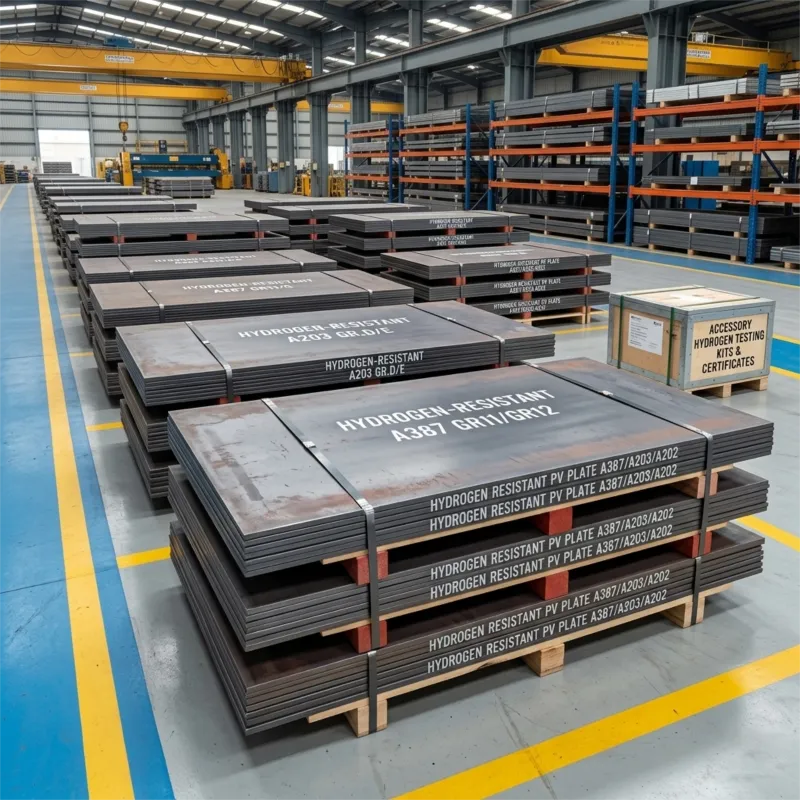
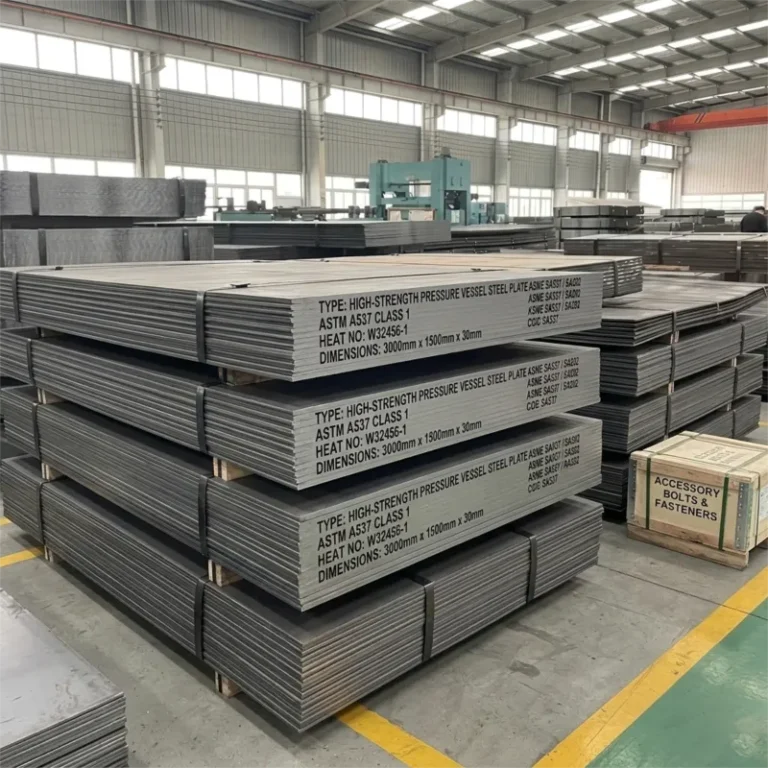
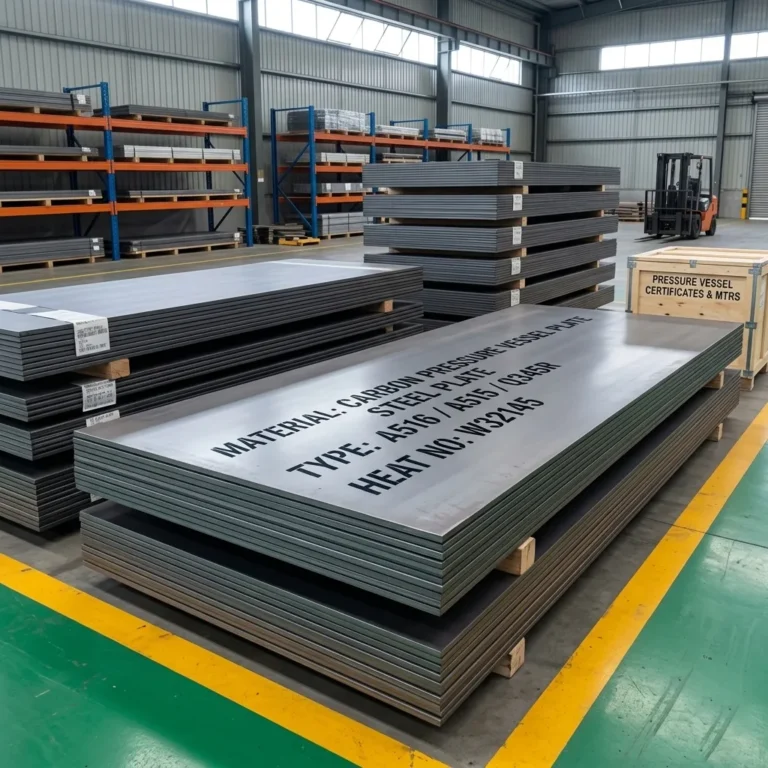
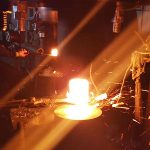
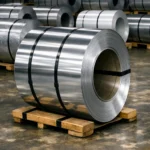
Low‑Temperature Pressure Vessel Steel Plate is engineered for sub‑zero and cryogenic service, where conventional carbon steel becomes brittle and unsafe. These steels maintain:
High impact toughness at low temperatures
Stable microstructure under temperature cycling
Good weldability and fabrication performance
Reliable resistance to brittle fracture
They are widely used in LNG storage, cryogenic equipment, low‑temperature pressure vessels, and petrochemical low‑temperature systems.
🟪 Product Specifications
Thickness: 6 – 200 mm
Width: 1500 – 3000 mm
Length: Custom lengths available
Delivery Conditions:
Normalized
Quenched & Tempered
Thermo‑Mechanically Rolled
UT Testing (A/B/C/D) available
🟪 Key Features
High impact toughness at sub‑zero temperatures
Nickel‑alloy and normalized options for enhanced low‑temperature performance
Good weldability and formability for pressure vessel fabrication
Stable mechanical properties under repeated cooling and heating cycles
Suitable for thick‑wall, high‑pressure, low‑temperature vessels
🟪 Included Grades
ASTM / ASME
A203 (Grade A / B / D / E / F) — Nickel‑alloy cryogenic steel
A516N (Normalized A516 Gr 60 / 65 / 70 with low‑temperature impact test)
(Values are typical for low‑alloy pressure vessel steels; exact values depend on grade and condition.)
🟪 Applications
LNG storage tanks and terminals
Cryogenic pressure vessels and storage tanks
Liquid oxygen / nitrogen / argon tanks
Low‑temperature refinery and petrochemical units
Gas separation and refrigeration systems
Low‑temperature pipelines and pressure systems
🟪 Why Use it
Low‑temperature pressure vessel steels are required when equipment operates below freezing, where standard carbon steels lose toughness and become brittle. These steels ensure:
Safe operation in sub‑zero environments
Compliance with pressure vessel design codes
Long‑term reliability under temperature cycling
🟪 Why Choose WelSteels
Complete range of low‑temperature pressure vessel steel grades
Expertise in nickel‑alloy and normalized low‑temperature steels
Precision cutting, beveling, rolling, and heavy‑plate processing
Third‑party inspection available (SGS / BV / TUV)
Export‑grade seaworthy packaging and stable global supply